Reports from The Resistance Journal Entry #331
A Fill-In-The-Blanks Debrief, by a Change Practitioner Who Survived
TL;DR: A fill-in-the-blanks story for every practitioner who has ever rolled off a project and needed a moment. Fill in the blanks. Read the story. Feel seen.
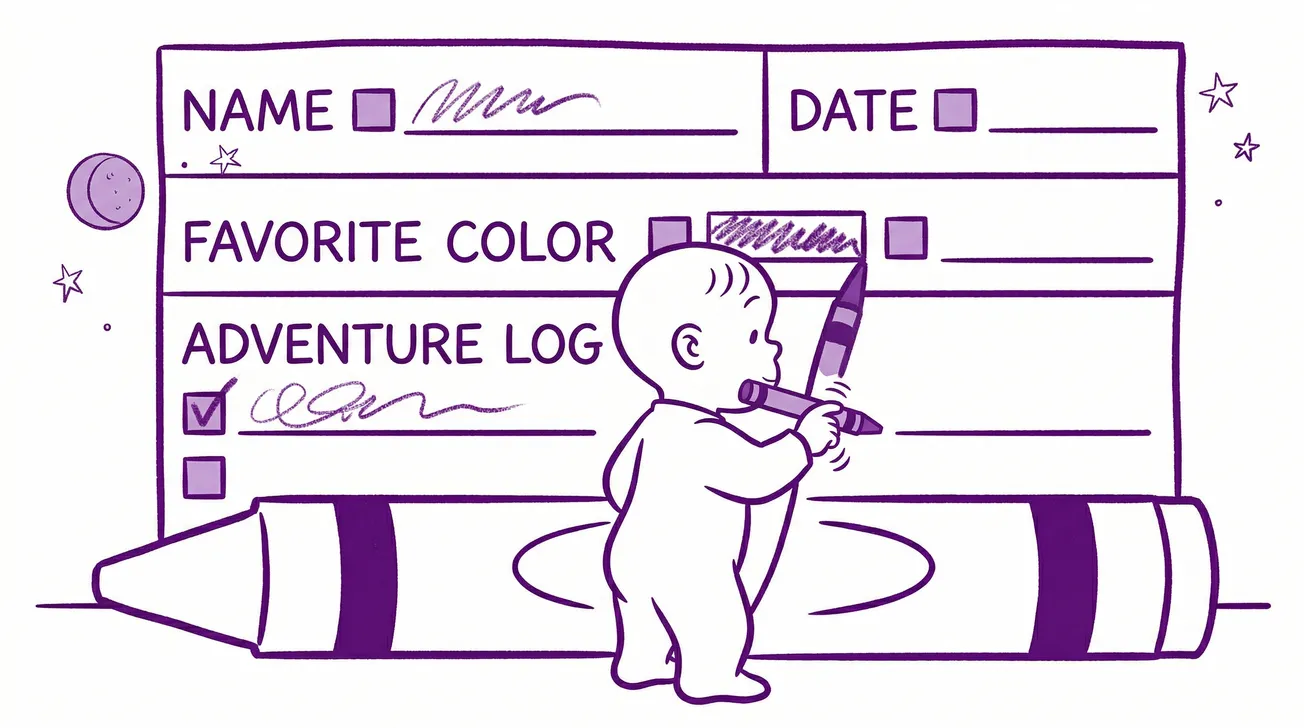
Instructions: Fill in the word list below WITHOUT reading the story first. Then transfer your answers to the matching numbered blanks. Share at your next community of practice meeting. Or just email it to your closest change peep. They'll appreciate the humor.
WORD LIST
1. Your name ________________
2. Corporate buzzword (transformation / evolution / acceleration / excellence) ________________
3. Vague verb (align / elevate / modernize / reimagine) ________________
4. Number between 6 and 24 (months the project was already underway when you arrived) ________________
5. Number between 2 and 8 (weeks until go-live when you arrived) ________________
6. Thing that is not change management (communications / training / vibes / morale) ________________
7. Dollar amount (what you quoted) ________________
8. Smaller dollar amount (what they approved) ________________
9. Name of person who is not the sponsor but acts like they are ________________
10. Excuse (any excuse — you have a collection) ________________
11. Name of actual sponsor you will meet exactly once ________________
12. Positive adjective (committed / energized / bought-in / passionate) ________________
13. Name of VP everyone knows is a problem ________________
14. Adjective describing #13 (cautious / skeptical / misaligned / a lot) ________________
15. Important thing you were not funded to do (impact assessment / readiness survey / resistance plan / stakeholder analysis) ________________
16. Gentler name for #15 that survived the budget review ________________
17. Number of slides in the communication deck they asked you to simplify ________________
18. Number of slides it became after everyone gave feedback ________________
19. Name of person who gave the most confusing feedback ________________
20. Thing leadership cut from training (the practice scenarios / the Q&A time / the second session / all of it) ________________
21. Reason given for cutting #20 (not enough time / too expensive / people can figure it out / we trust them) ________________
22. Number of days after go-live the first crisis happened ________________
23. Person blamed for the crisis (the system / the users / the training / you) ________________
24. Thing that was supposed to exist after you left but doesn't (a sustainability plan / a change champion network / an internal CM owner / institutional memory) ________________
25. Emotion you felt on your last day (relief / grief / pride / numbness / all of the above) ________________
26. Vague timeframe (soon / once things settle / before the next wave / TBD) ________________
27. Positive thing you will tell yourself before the next project ________________
THE STORY
(Fill in your answers. Read slowly. You earned this.)
PLUS / MINUS / DELTA
A Project After-Action Review By __1__, Change Practitioner. Written from the parking lot, engine running.
PROPOSAL
My name is __1__ and I was hired to help with the __2__.
The __2__ was a __2__ initiative to __3__ the entire organization. It had been underway for __4__ months. Nobody had thought to involve change management yet, because the project team believed that what they needed was not change management, but __6__.
They were incorrect.
They had a budget of $__7__ for change management. After conversations I can only describe as __14__, this became $__8__.
Plus: I got the project. Minus: I got the project.
KICKOFF
The executive sponsor was __11__. __11__ could not attend the kickoff because __10__. In his place was __9__, who said __11__ was __12__ and I would meet him __26__.
I met __11__ once. He seemed __12__. He had clearly not read the proposal.
There was also __13__. __13__ was described to me as __14__. I wrote in my notebook: do not let __13__ near the communication plan. __13__ ended up on the communication plan approval committee.
Plus: The kickoff had good snacks. Minus: The kickoff had no charter, no decision rights, and no __11__. Delta: Next time, ask to see the charter before accepting the snacks.
ASSESSMENT
I proposed a __15__. Leadership said a __15__ was not in scope. We compromised. I did a __16__, which was the same thing with a friendlier name and forty percent less funding.
The __16__ found seventeen areas of significant risk.
I presented eleven of them. __9__ said this felt __14__. I presented seven. __9__ said could we maybe do three. I presented three and called them opportunities.
Everyone felt much better.
Plus: The __16__ was genuinely good work. Minus: It is currently on page four of a SharePoint site nobody visits. Delta: Next time, laminate it.
PLANNING
I built the communication plan. It had __17__ slides. After __19__ gave feedback, it had __18__ slides, two new approval chains, and a section that contradicted the section before it in ways I was not allowed to fix.
__13__ reviewed it and said it was __14__.
__13__ always said everything was __14__. It was the only adjective __13__ owned.
I also built a training plan. The training plan included __20__. Leadership removed __20__ because __21__. I explained why __20__ mattered. Leadership nodded. __20__ stayed removed.
Plus: The communication plan was approved. Minus: It took __4__ weeks, three executive reviews, and one conversation I would describe as spiritual. Delta: Next time, start with fewer slides and more prayer.
EXECUTION
I sent the communications. Some people read them. Most people did not. One person replied to all with a question that was answered in the communication they had not read. I answered it anyway. With a smile. Because that is what we do.
I delivered the training. It was good training. I know it was good training because __9__ told me it was good training right before asking if we could shorten it by half because __21__.
We shortened it by half.
__13__ did not attend the training. __13__ sent a delegate. The delegate had not been briefed. The delegate had questions. I answered them. With a smile. Because that is still what we do.
Plus: People showed up. Minus: Showing up and being ready are different things, and only one of them showed up. Delta: Next time, define "trained" before the training starts.
GO-LIVE
Go-live was on a __16__. This was not the original go-live date. The original go-live date had moved __4__ times. I had updated the change plan each time without additional budget because __21__.
For approximately __5__ hours, everything was fine.
Then it was not fine.
__22__ days after go-live, the first crisis arrived. It was caused by __23__. Everyone agreed it was caused by __23__. This was not entirely accurate, but it was the version of events that required the least uncomfortable conversation, so it stood.
I drafted a response communication. It was approved in record time. Crises, I have learned, have a wonderful effect on approval speed.
Plus: We went live. Minus: Several things went live with us that we were not expecting. Delta: Next time, the definition of "ready" goes in the charter, in writing, in a large font.
HYPERCARE
Hypercare lasted __5__ weeks. During this time I answered __17__ questions that were in the training materials, attended __18__ meetings that could have been emails, and watched __13__ take credit for three things he had previously described as __14__.
__11__ sent a note to the team congratulating everyone on a successful launch. It was a very nice note. He spelled my name wrong.
I also discovered during Hypercare that __24__, which I had flagged as essential in the __16__, the planning phase, the execution phase, and a strongly worded email in week seven, did not exist. It had never been built. There was no owner. There was no plan to find an owner. __9__ said they would sort it out __26__.
Plus: The users were resilient. People always are. Minus: They had to be, because we did not give them __24__. Delta: Next time, __24__ is non-negotiable or I am non-attending.
ROLL-OFF
On my last day, I handed over a transition document that nobody requested. I sent a final note to __9__, who replied with a thumbs-up emoji. I received a LinkedIn recommendation from __11__ that described me as a consummate professional who elevated our __6__ efforts and did not mention change management once.
I sat in my car.
I felt __25__.
Both things were true.
I thought about __13__, who had been __14__ about everything and was now, according to __9__, leading the sustainment effort internally. I thought about the __15__ that became a __16__ that became a SharePoint page. I thought about __20__, cut in planning, mourned at go-live, eulogized in Hypercare.
I thought: I will do this differently next time.
I will ask harder questions in the proposal phase. I will not accept $__8__ when the work requires $__7__. I will put __24__ in the contract. I will meet __11__ before I start, not after I finish.
I will tell myself __27__.
And then someone will send an email that says nothing too formal, just some __6__, and I will say yes, because this work matters, and because I am apparently constitutionally incapable of walking away from a project that needs me.
Plus: I am good at this. Minus: They rarely know what they hired. Delta: Keep going anyway.
The Resistance salutes every practitioner who has ever written a transition document nobody requested.
ChangeGuild: Power to the Practitioner™