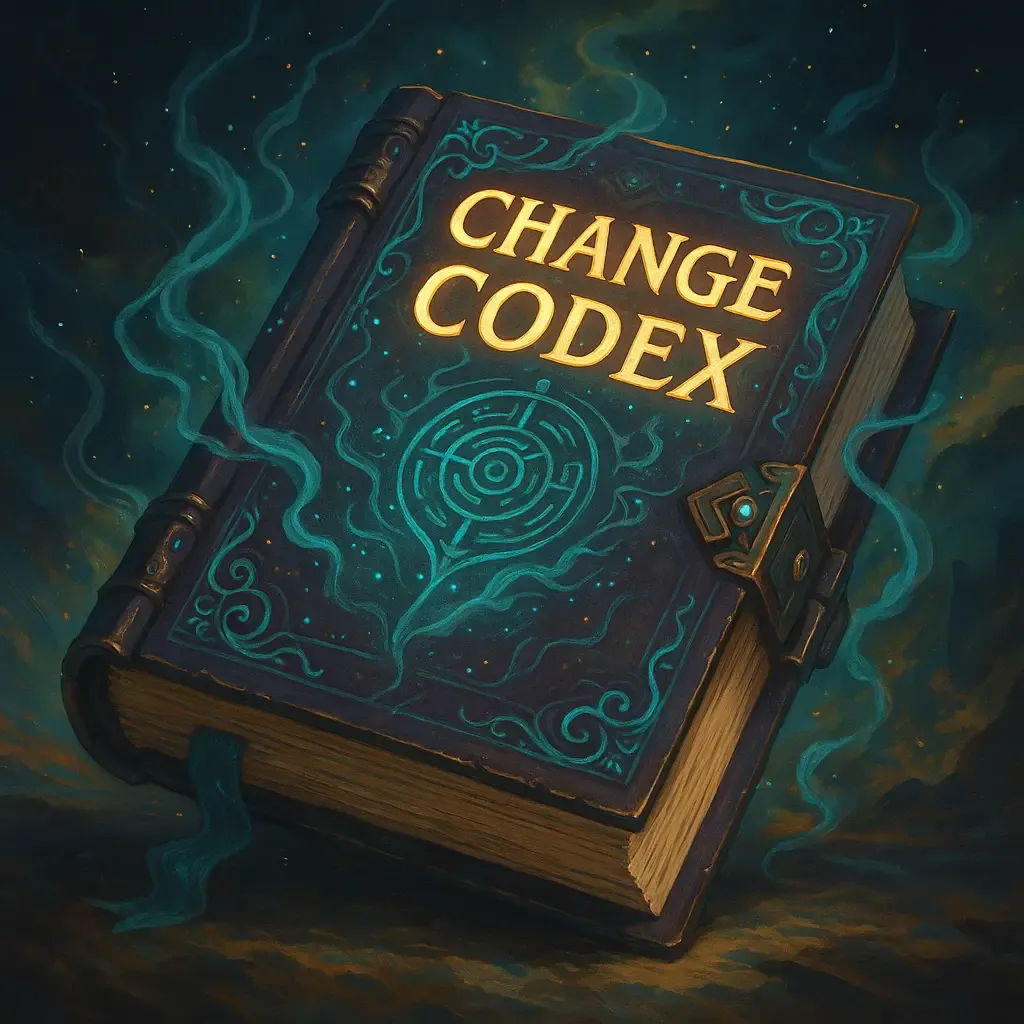
If you lead change for a living - whether inside an organization or from the outside - you already know that the work is messy, urgent, and often misunderstood. You also know that time is tight, expectations are high, and your stakeholders rarely wait for you to get your next deck or deliverable just right.
That’s why I built the Change Codex: a custom GPT designed specifically to support change management practitioners like you.
The Change Codex isn’t a generic assistant. It’s trained on real-world prompts, templates, and insights that reflect the actual work of change - framing strategies, drafting stakeholder messaging, building readiness tools, or pressure-testing comms. It understands what a change impact assessment is. It knows why sponsors matter. It gets the politics.
And most importantly, it’s built with your time in mind.
You can ask it to:
- Draft stakeholder emails that sound like you wrote them.
- Generate resistance mitigation strategies based on specific personas.
- Summarize and reframe executive talking points.
- Build simple templates you can use in the field.
- Edit your own notes into something executive-ready.
It’s not here to replace your judgment. It’s here to amplify it.
The Change Codex lives on ChatGPT Pro and is completely free to use, but you'll need an active ChatGPT Plus subscription to access it. It’s available here for any practitioner who wants faster, sharper support in the flow of work.
If you’re curious or skeptical, try it out. Give it a real scenario. Make it work a little. You’ll know pretty quickly if it’s the kind of help you’ve been waiting for.
Final Thought
The best tools don’t do the work for you. They make you better at doing the work that matters.
ChangeGuild: Power to the Practitioner™
 Dan Olson
 Dan Olson
 Dan Olson
Bring AI Into Your Change Practice
You don’t need to be technical to start using AI effectively. You just need the right mindset, a few smart workflows, and someone who’s been there.
I’ve spent the last two years coaching change leaders on how to integrate AI into their daily work — from stakeholder comms to strategy decks, risk planning to resistance mitigation. This isn’t about building bots. It’s about making your practice faster, sharper, and more scalable.
Book a session and learn how to make AI work for your kind of change.
This post is free, and if it supported your work, feel free to support mine. Every bit helps keep the ideas flowing—and the practitioners powered. [Support the Work]